In this era of global digital transformation that is reshaping the overall landscape of businesses these days, there is an increasing demand for effective IT infrastructure within Pakistan. However, sustaining business continuity requires both organizational and technical barriers to be managed. For instance, the operational aspect of IT infrastructure security as well as the technical complexities of IT infrastructure modernization are just a few of the common issues that Pakistani organizations deal with. These issues are the focal point of our article, as the aims of the article include details about the current state and issues pertaining to IT infrastructure in Pakistan, and its measures toward being adaptive, secure and scalable in the future.
IT Infrastructure: The Backbone of Contemporary Businesses
IT infrastructure is fundamental to an organization and its success, it can be anything ranging from hardware to IT infrastructure software that helps carry out organizational tasks. Also in Pakistan, the demand for dependable IT infrastructure components is on the rise, especially amongst the banking, telecommunication and e-commerce sectors where this need has become vital for efficiently providing services and keeping customers satisfied. Scaling and sustaining this infrastructure is however a great hurdle for many businesses.
One of the primary difficulties is how to maintain the application and perspectives of IT infrastructure management in conjunction with rapid changes in the business environment. For example, the IT infrastructure strategy should be tailored to align with emerging technologies, current workforce environment and business goals in Pakistani organizations. Not only do businesses need to create a strong IT security infrastructure, there is a need to manage enhancement against anticipated technical disruptions as rapid evolution of IT architecture is the future of growth today.
Organizational Challenges in IT Infrastructure Development
Restricted Budgets and Human Resources
A major part of Pakistan’s economy comprises businesses that are classified as small and medium-sized enterprises (SMEs) which have difficulties allocating their resources to IT infrastructure services. Limited Budgets means lowered productivity levels and completing tasks in less sophisticated structures which reduce proficiency in output and invite security threats into the enterprises. These companies need to achieve an equilibrium with investment and efficiency whilst making sure their IT infrastructure is robust and up-to-date.
Talent Shortages and Skill Retention
The demand and need to incorporate IT infrastructure security is rapidly rising as the businesses in Pakistan are becoming more digitized. This crucial aspect of organizational growth displays an ever-growing demand for professionals specializing in IT infrastructure management and IT infrastructure consultancy. Despite having a great talent pool of IT professionals, it is still a struggle to retain skilled employees due to the increasing international demand for technology professionals. The economic conditions of Pakistan are forcing people to move abroad and without sufficient skills, companies may find it difficult to maintain their components of IT infrastructure, which will result in ineffectiveness, sometimes disaster. To local businesses that seek to operate within Pakistan, it will be important to pay attention to continuous training and development so as to be able to close on this skills gap and allow IT professionals to flourish within the country.
Technical Issues in IT Infrastructure: A Path to Resilience
Cybersecurity Threats
With increasing cyber threats, there is a need for organizations to build up strong IT security infrastructure that will protect its information assets while ensuring business continuity. One challenging issue that worries most companies is the risk of financial loss and reputational damage that follow a breach such as the hacking of customer information systems. For this reason, any security loophole in an organization should be addressed before it gets exploited; in this case, while implementing IT infrastructure security it should be backed by regular vulnerability scans.
Lack of Advanced IT Infrastructure Monitoring Tools
To make sure that the overall IT infrastructure is healthy, monitoring needs to be enabled. Unfortunately, most organizations in this Country are not equipped with state-of-the-art IT infrastructure monitoring tools or have data management protocols which can help them save this useful information properly. These monitoring tools give us a real-time view of how the system is performing and enable teams to catch issues before they spiral out. For that purpose, it is extremely crucial to invest in robust IT infrastructure monitoring tools to prevent system downtime most importantly for businesses upward like banking and e-commerce, where the entire ecommerce website you have will be live 24/7.
Outdated Systems: Hindrance to IT Infrastructure Modernization
Legacy Systems are outdated tools which also hinder the IT infrastructure modernization process as an obstacle in the businesses of Pakistan. Legacy systems are not very flexible which means that operations cannot be scaled or emerging technologies such as Infrastructure as a Service (IaaS) can never properly come into play for business agility and competitive edge. This is the challenge facing today's businesses that rely on outdated systems and processes thus slowing the adaptability with IT infrastructure, that require software or hardware changes to support proficient changes. Businesses not willing to compromise resilience and performance however are faced with a self-imposed limitation created because they heavily depend upon their legacy systems leaving them no choice. Adopting a phased modernization method lets organizations cannibalize their legacy systems with slightest disruptions as well as allow them carry out the processes as usual while attaining growth.
Incorporating Emerging Technologies in IT Infrastructure
The adoption of new technologies, such as cloud computing, artificial intelligence and data analytics can offer a significant advantage to companies that are considering IT infrastructure modernization. These developments solve a variety of issues presented with concepts such as improving scalability, managing expenses and so on.
Cloud Computing and the Shift to Infrastructure as a Service (IaaS)
Cloud computing has paved its way in business processes becoming one of the most crucial aspects of businesses these days, it is also recognized as a game-changer. Cloud computing allows businesses to comprehend information technology infrastructure with no need of extensive hardware. Moreover, Infrastructure as a Service (IaaS) lets businesses control remote servers, diminish the overhead expenses as well as guarantee consistent and efficient data storage. Companies that adopt cloud can ensure their IT infrastructure architecture is scalable and accommodates changing needs, for short-term as well long run growth.
Data Analytics and the Future of IT Infrastructure
Another promising technology that is defining the future of IT infrastructure in this Country is Data Analytics. Data can essentially be the lifeline for businesses these days — to streamline processes, identify trends and act upon that with proficient decisions. Support for data analytic tools helps organizations enjoy the benefits of analytics and therefore efficiency which in turn contributes to innovation, this is the sort of setting one seeks while approaching more or less a Data-based IT Infrastructure management.
The Role of Artificial Intelligence and Machine Learning
Modern IT infrastructure solutions majorly rely on AI and machine learning. These technologies can improve the cybersecurity of IT infrastructures by flagging scenarios that look like a security threat. AI can also streamline mundane tasks, thereby permitting IT infrastructure to center on more key measures and drive bigger advanced transformation. This form of AI integrated functionality in IT infrastructure provides a future-ready solution that is tailor-made to the unique requirements of Pakistani businesses and supports them with capabilities suitable to lead in an era where competition only seems to increase day by day.
Building a Secure, Scalable IT Infrastructure for Pakistan’s Future
With its intrinsically complex nature of an IT infrastructure, corporations operating in Pakistan would find a need to look into the future of creating protected, scalable IT systems. Increasingly, firms begin to seek IT infrastructure consulting services where consultants bring best-in-class solution suites enhancing security levels while, by the same token, they enhance operational performance. These guide the organizations in applying very effective IT infrastructure architecture that are quite safe but also modernize any existent legacy.
Scalable IT Infrastructure Software: Application of scalable IT infrastructure software will enable businesses to grow without having to be bound by their technology. Scalable software works with a company's goals; thus, the upgrading and expansion process is very seamless. Data centers as strategic assets allow companies to be competitive and support regulations.
Data Centers as a Strategic Asset
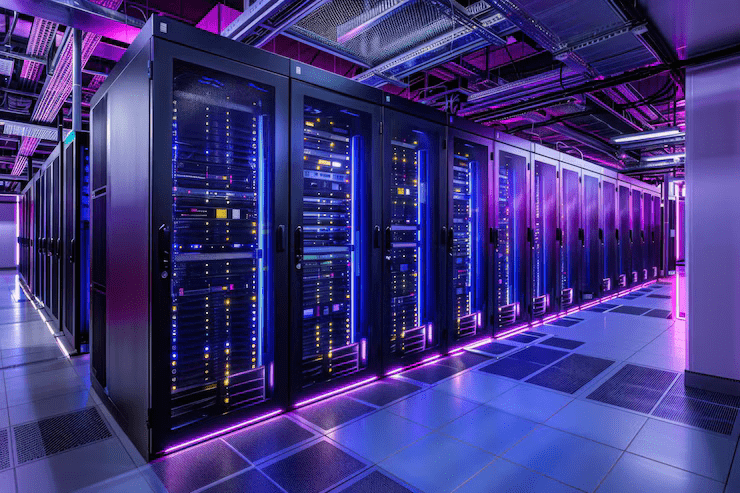
Data centers play a very crucial role in Pakistan's digital economy by providing safe data storage for various industries. Data centers, however, need to be managed by proper IT infrastructure management so that continuous operation is possible. Routine maintenance and security measures prevent cyber threats from becoming dangerous. Reliable data centers provide companies with a way of securing their digital assets. Data centers become a precious component of any secure infrastructure solutions strategy.
Conclusion: The Way Ahead for Pakistan's IT Infrastructure
IT infrastructure is the future for businesses in Pakistan. Its advancement will provide many opportunities for businesses for growth, security, and productivity. The organizational and technical challenges need to be addressed to attain maximum benefits. Modern IT infrastructure solutions, integration of emerging technologies, training of human resource, elimination of legacy systems and security shall build a strong foundation that ensures future success in companies. As a Pakistani business looks into the future, well-equipped with modern IT, focus on IT infrastructure modernization and effective strategic planning will set that business up to shine in this digital-first world.